Jungle Bird Manor · Game guide
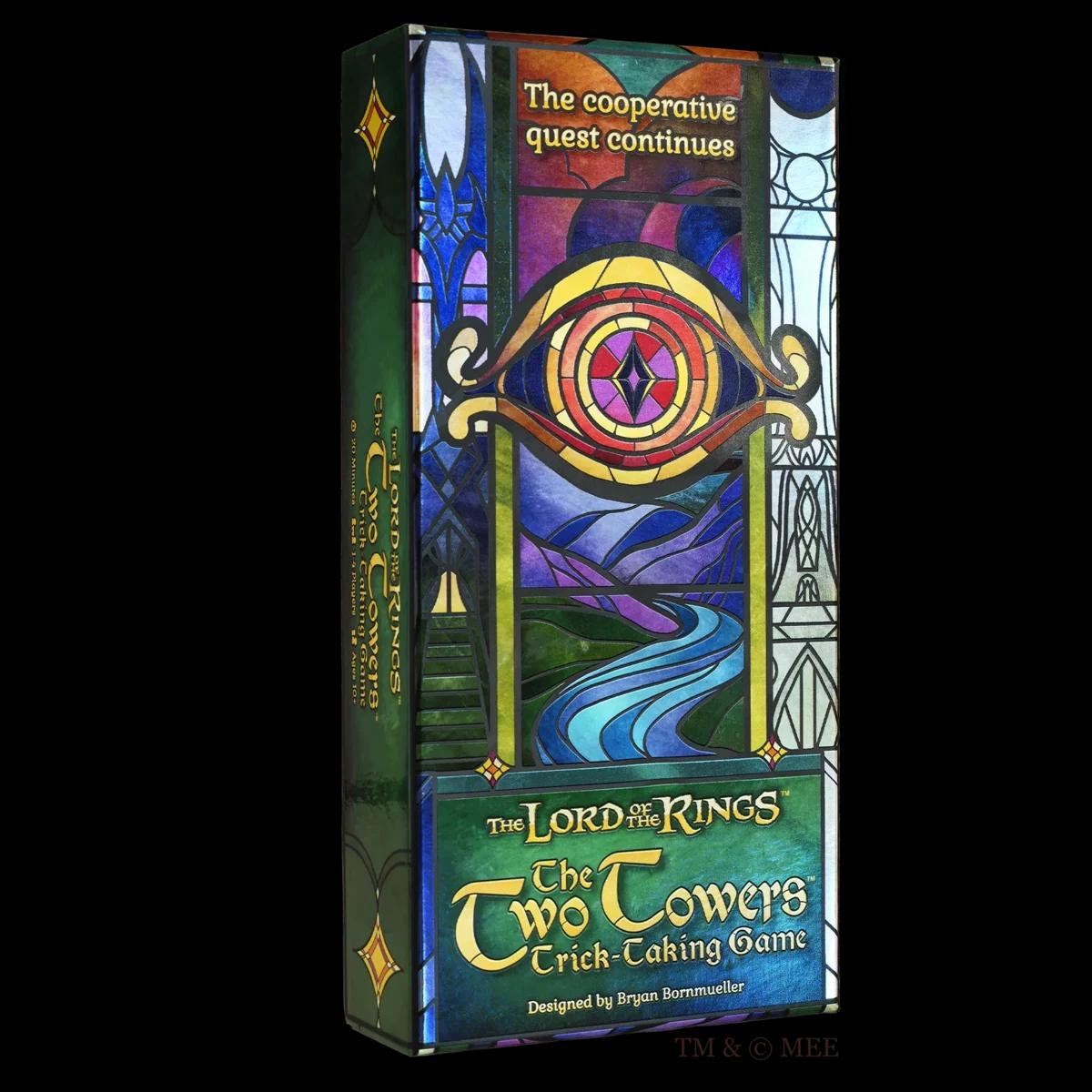
The Two Towers: Trick-Taking Game
Continue through Middle-earth with new cooperative chapters and character goals.
Your aim
Meet every character goal in this standalone sequel.
Each group of one card per player is a trick. Its winner collects the cards and leads the next trick. Work together to meet every character’s goal, while keeping your hands secret.
Set up
Before the first turn
- cards each · 3 /4 players
- 12 /9
- faceup non-Tower lost card
- 1
- first chapter
- 19
Start at Chapter 19
The Departure of Boromir. Use its required characters; keep Fellowship cards separate.
Prepare the deal
Set a non-Tower lost card faceup aside. Deal 12 each with 3 players, 9 with 4.
Choose characters
White Tower holder takes Aragorn. Others choose clockwise from Aragorn’s left; Boromir is required. Use correct 3/4-player character sides. Resolve setup actions starting with Aragorn; keep White Tower.
Play
At the table
- Lead / follow suit
- Resolve Towers
- Check goals
- Winner leads
Aragorn leads first
Aragorn plays the first card. Each other player plays one clockwise. You must play the same suit as the first suited card if you hold that suit.
Resolve Towers
Play a Tower only when you cannot follow suit, or lead with it. One Tower wins; both cancel. If a Tower leads, the first suited card sets the suit.
Winner leads next
Work toward every goal. Keep hidden-card information private. Later chapters add their own rules.
Both Towers cancel; the suited card wins
Three-player example: White Tower is led, followed by Hills 3 and Black Tower.
Rules reference
Use these rules when the matching situation comes up.
First chapter goals
Aragorn + whoever plays Black Tower must jointly win at least as many tricks as everyone else combined.
- Boromir must win 2+ tricks before Black Tower is played, then none after its trick is won. Read the chosen Gimli/Legolas side for their suit target.
- Public goals can be discussed; hidden hands and character-choice preferences cannot. Use chapter success/failure directions.
Later chapters · Orcs
An Orc can be played only when unable to follow suit and can never win. Being forced to lead one loses the chapter.
- After a Tower lead, playing an Orc is allowed. A trick of only Orcs + both Towers has no winner; original leader leads again.
- Keep this standalone sequel’s cards separate from Fellowship. Solo/two-player modes use their dedicated setup.
Finish & score
Every goal met → follow the chapter’s success step
Solo and 2-player arrangements use dedicated rulebook sections.
The essentials for a first game. Use the official rules for full setup diagrams, card effects and special cases.
See it played
Watch & learn
A visual walkthrough for your first game.
Keep the game moving
Quick questions
Do we need Fellowship first?
No. The Two Towers is standalone and uses its own deck.
Does this use Fellowship’s Ring rules?
No. This game uses Towers, including cancellation when both appear. Also, ordinary Rings were not trump in Fellowship; only its One Ring had a special win choice.
Can I play a Tower whenever I like?
You may lead a Tower, or play one when you cannot follow suit.
What if both Towers appear?
They cancel. The highest card of the first non-Tower suit played wins. If a Tower led, the next suited card establishes that suit.
Rules & edition reference ↗The booklet in your box takes precedence if your printing differs.