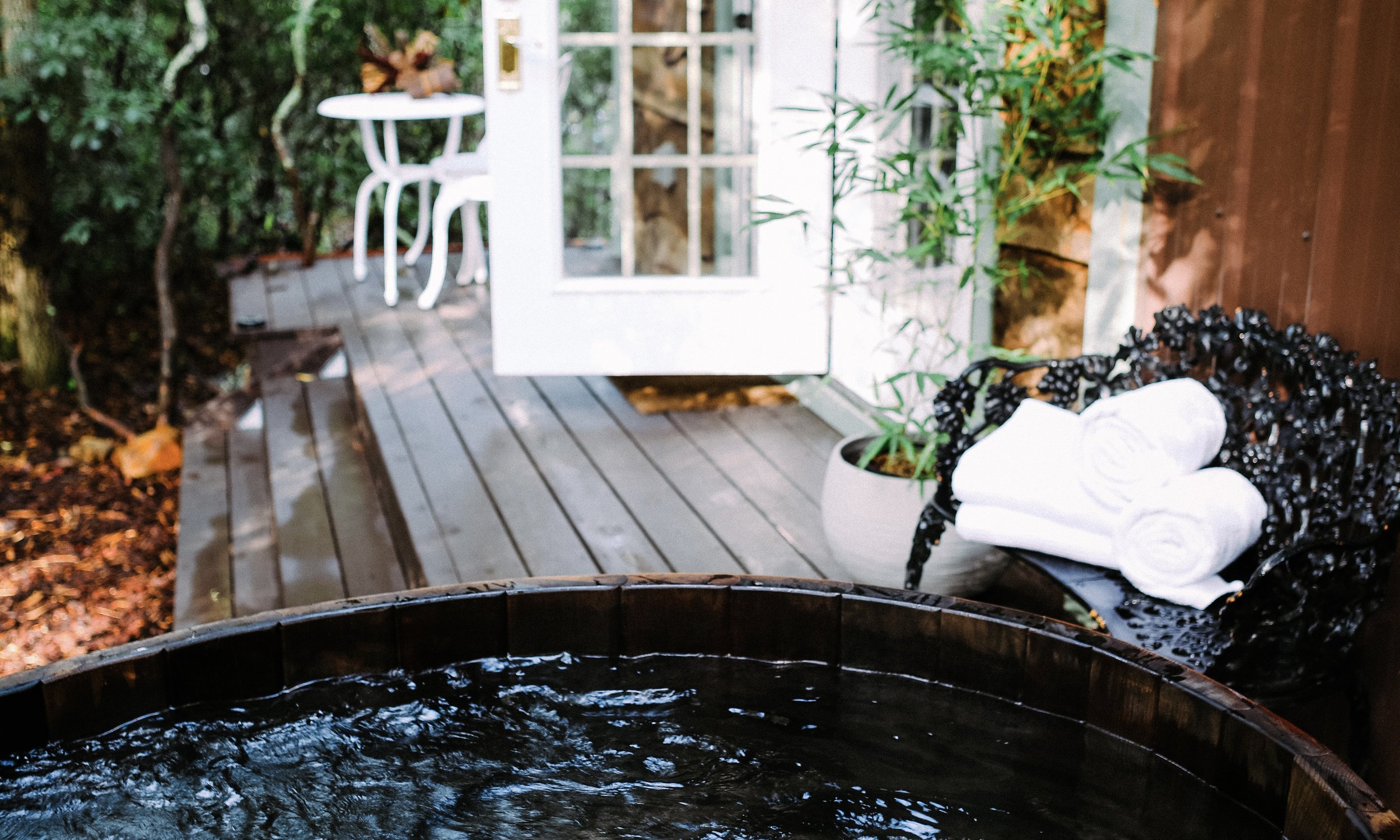
Sunlight filters through hemlock and oak. Leaves crunch softly beneath your feet. The scent of pine and damp earth fills your lungs. Your shoulders drop. Your breath deepens. For the first time in weeks—maybe months—you're fully present.
This isn't a hike. It's not exercise. It's shinrin-yoku, the Japanese practice of forest bathing, and it might be exactly what your nervous system has been craving.
If you've been feeling the weight of screens, notifications, and the relentless pace of modern life, you're not alone. Forest bathing offers a simple, science-backed antidote: intentional time among trees. No fitness tracker required. No summit to reach. Just you, the forest, and slowing down.
What Is Forest Bathing?
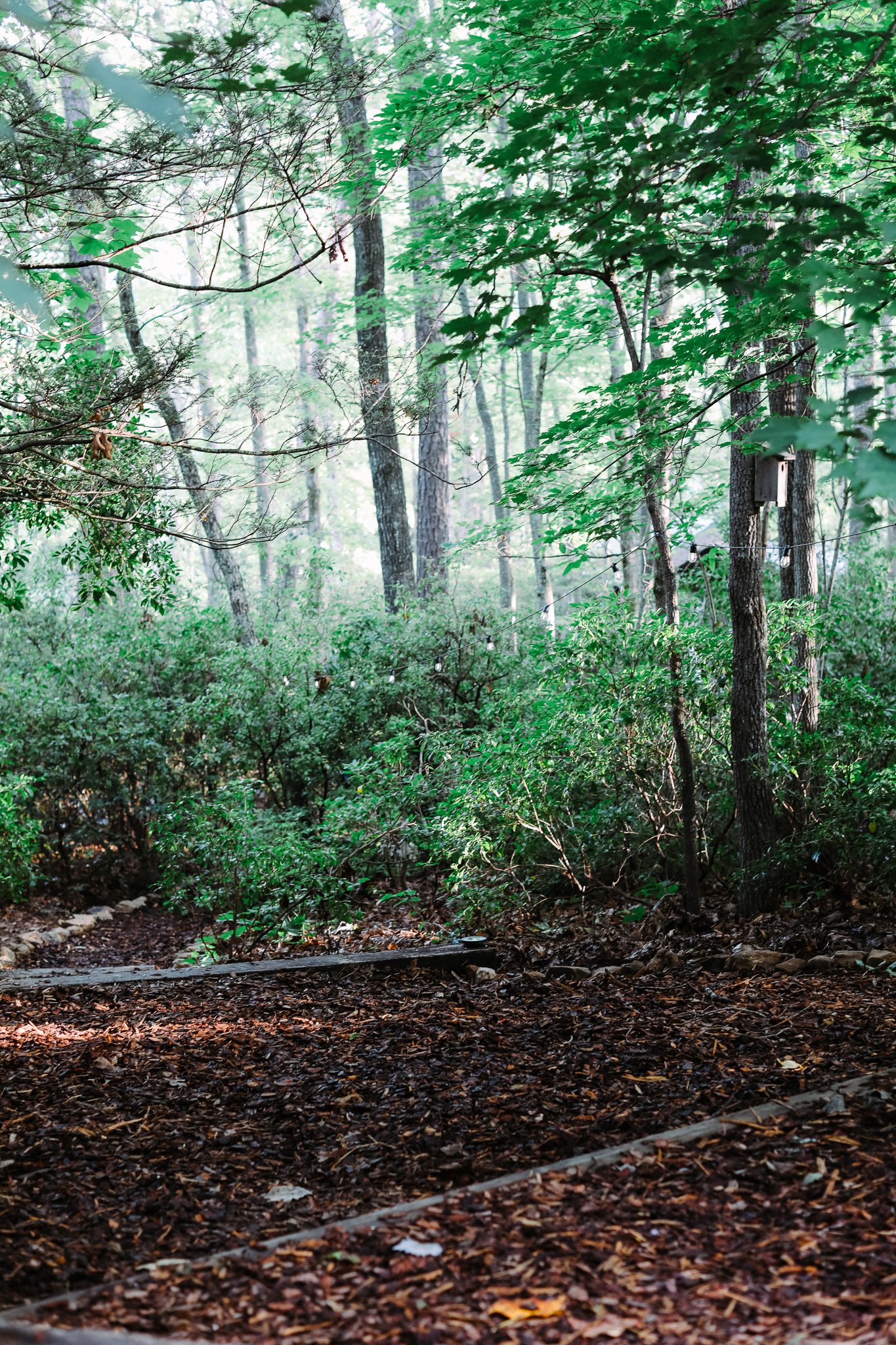
Forest bathing, or shinrin-yoku (literally "forest bath" in Japanese), was developed in Japan in the 1980s as a form of preventative healthcare. The concept is beautifully simple: spend time in a forest environment, engaging all five senses, and let nature do the rest.
This isn't about covering miles or identifying bird species (though both are wonderful). It's about being rather than doing. You might spend twenty minutes noticing the texture of bark, listening to birdsong, or simply sitting still beside a stream.
The practice gained traction as Japanese researchers began documenting its measurable health benefits—reduced cortisol levels, lowered blood pressure, improved mood, and enhanced immune function. Today, forest bathing has spread worldwide, with practitioners and guides bringing the practice to forests from California to the mountains of Western North Carolina.
The Science Behind the Trees
Here's what happens when you trade your desk chair for a fallen log:
Trees release organic compounds called phytoncides—essentially, the forest's immune system. When we breathe these compounds in, our bodies respond by increasing natural killer (NK) cells, which help fight infection and disease. One study found that a single day in the forest increased NK cell activity by 50%, with effects lasting up to a month.
But the benefits go deeper than immune support. Time in nature activates our parasympathetic nervous system (rest-and-digest mode) and quiets the sympathetic response (fight-or-flight). Heart rate variability improves. Stress hormones drop. The constant mental chatter—the planning, worrying, analyzing—begins to soften.
There's also something called "soft fascination" at work. Unlike the hard attention required for emails and traffic, nature holds our attention gently—a swaying branch, dappled light, the pattern of moss on stone. This allows our directed attention to rest and restore, which is why a walk in the woods leaves you feeling both relaxed and mentally refreshed.

How to Practice Forest Bathing: A Simple Guide
Ready to try it? Here's how to start:
Find your forest. You don't need wilderness. A park, a tree-lined trail, even a quiet green space will work. The key is trees, relative quiet, and freedom from interruption. If you're exploring Asheville, you're spoiled for choice—Pisgah National Forest, the Blue Ridge Parkway, and countless hidden trails provide the perfect backdrop.
Leave your phone behind (or silence it completely). Your phone is an attention vampire, and forest bathing requires your full presence.
Move slowly. Think less "hike" and more "wander." You might cover a quarter mile in an hour. That's perfect. Let your body lead—if something catches your eye, stop. If you feel drawn to sit, sit.
Engage your senses, one at a time. Spend a few minutes just listening. Then shift to noticing colors, textures, patterns. Touch the bark of a tree. Smell the air after rain. If there's water nearby, cup your hands and feel its temperature. This sensory awareness is the heart of the practice.
Release the agenda. There's no goal. No perfect way to do this. Some days you'll feel profound peace. Other days you'll notice your mind wandering to your to-do list. Both are fine. The practice is simply showing up.
Allow time. Aim for at least two hours if you can. Research suggests this is the sweet spot for measurable benefits, but even 20 minutes is worthwhile.
Forest Bathing in Asheville: Why the Mountains Matter
The Southern Appalachians hold some of the most biodiverse temperate forests on Earth. When you practice forest bathing here, you're walking among ancient hemlocks, breathing air filtered through rhododendron thickets, and listening to creeks that have carved these mountains for millennia.
There's something about elevation, too—the way mountain air feels cleaner, crisper. The way mist clings to ridgelines at dawn. The sense that these forests have held space for humans seeking restoration long before we had a Japanese word for it.
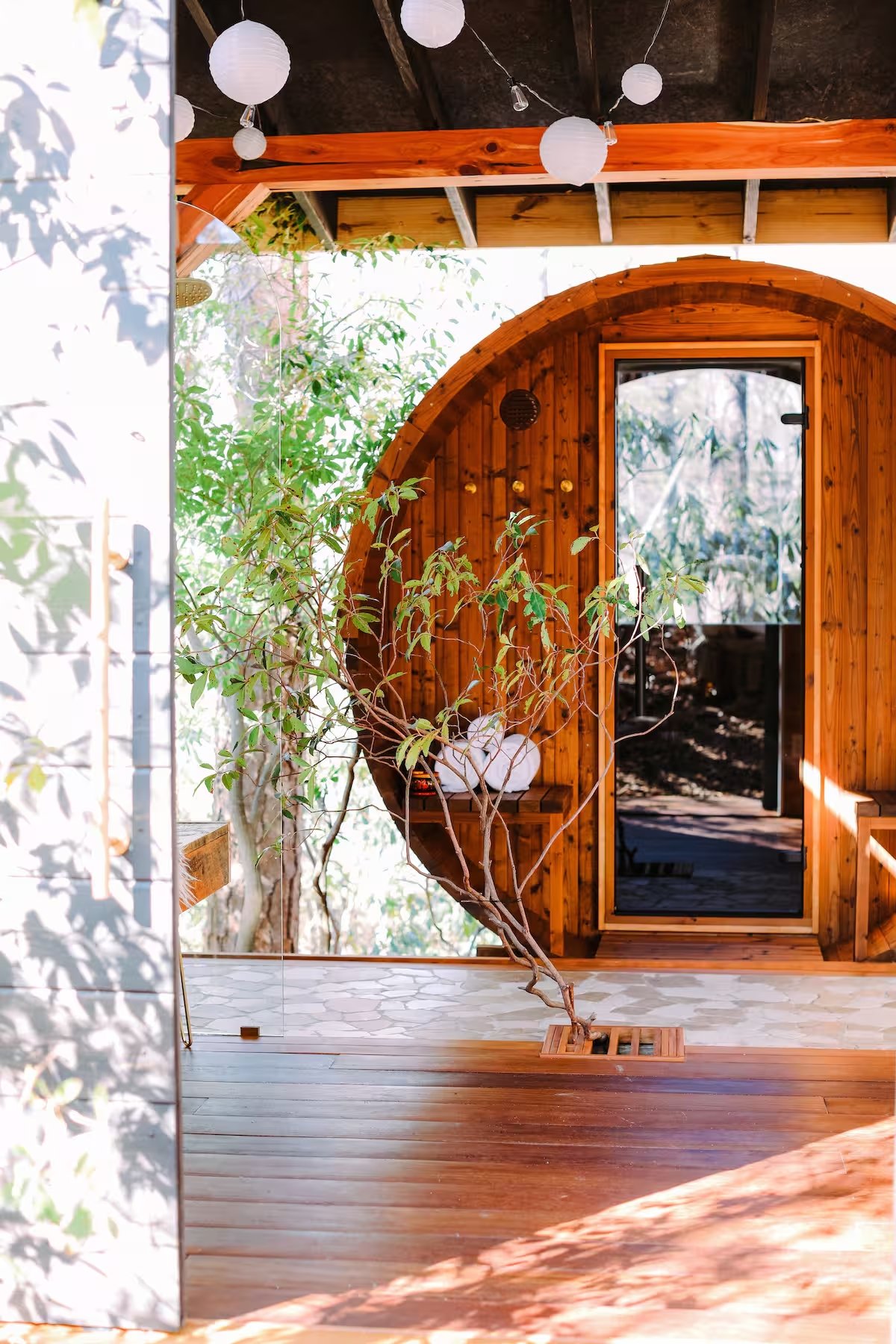
We designed our properties with this in mind. After your time in the forest, you can extend the nervous system reset with heat therapy—a private sauna session at our Treehouse Sauna Pavilion, followed by a soak in your own cedar hot tub under the stars. It's forest bathing's natural companion: the same slowness, the same sensory presence, the same invitation to let go.
What Forest Bathing Isn't
Forest bathing is not a workout. Your heart rate might barely elevate. That's the point.
It's not about tree identification or nature knowledge (though those are lovely bonuses). You don't need a practiced eye—only a willing heart.
It's not meditation, exactly, though it shares qualities with mindfulness practice. You're not trying to clear your mind or achieve a particular state. You're simply paying attention to what's actually here.
And it's definitely not reserved for people who already "love nature" or consider themselves outdoorsy. If you're alive, you're part of nature. The forest doesn't require credentials.
Your Invitation
The forest is always there, waiting without expectation. It asks nothing of you except presence.
If you've been craving permission to slow down, to stop optimizing and producing and improving—this is it. Forest bathing is a practice of non-achievement, which might be exactly why it works.
Next time you feel the weight of too many tabs open (in your browser and your brain), remember: the trees are there. They've been exhaling oxygen and phytoncides and quiet invitation since long before you arrived.
All you have to do is show up and breathe.
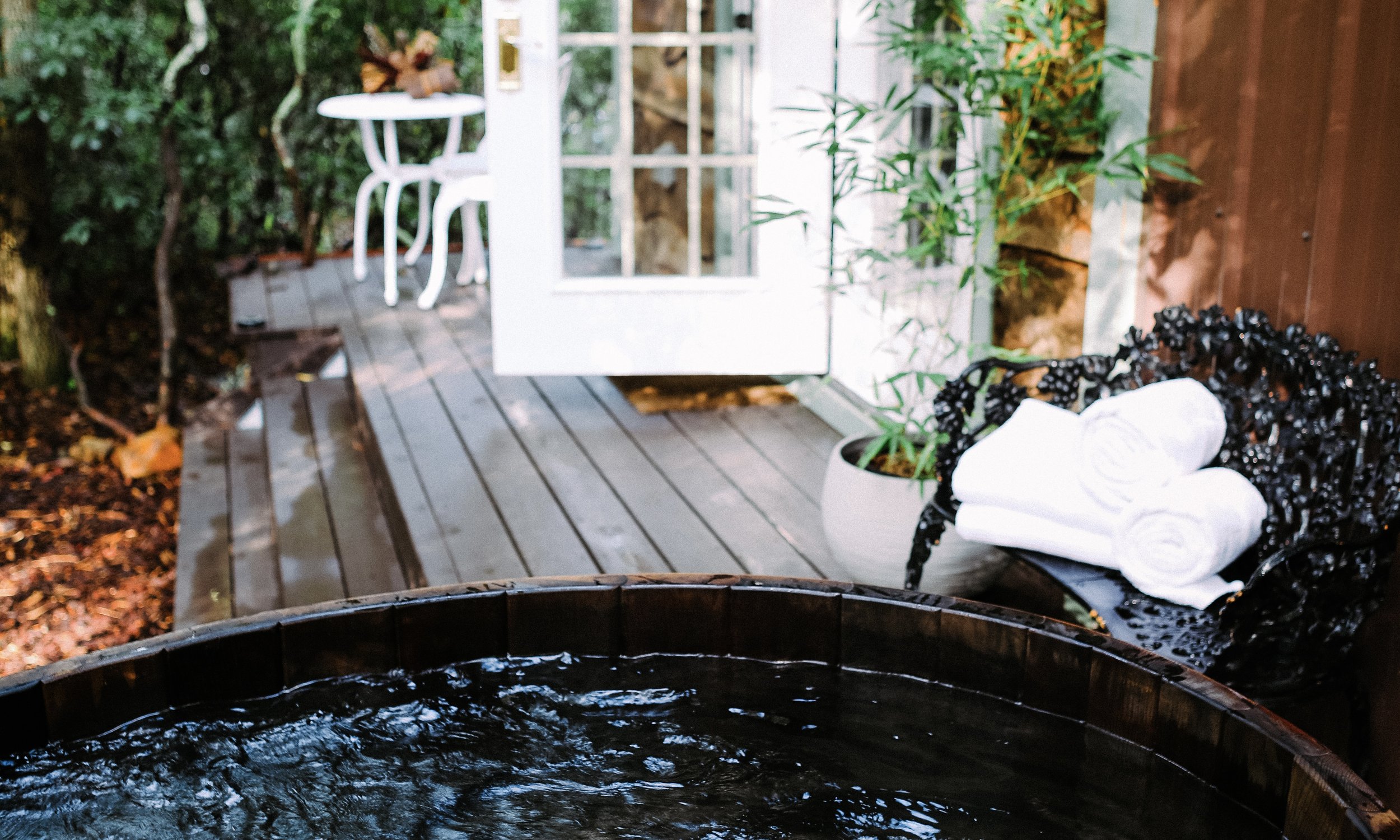
_Ready to combine forest bathing with the restorative power of heat therapy? Our properties in Fairview offer private hot tubs and sauna access, surrounded by 1.5 wooded acres of mountain-laurel forest. After a day of exploring mountain trails, there's nothing quite like sinking into hot water under a canopy of stars. Explore our retreats and find your invitation to slow down._